
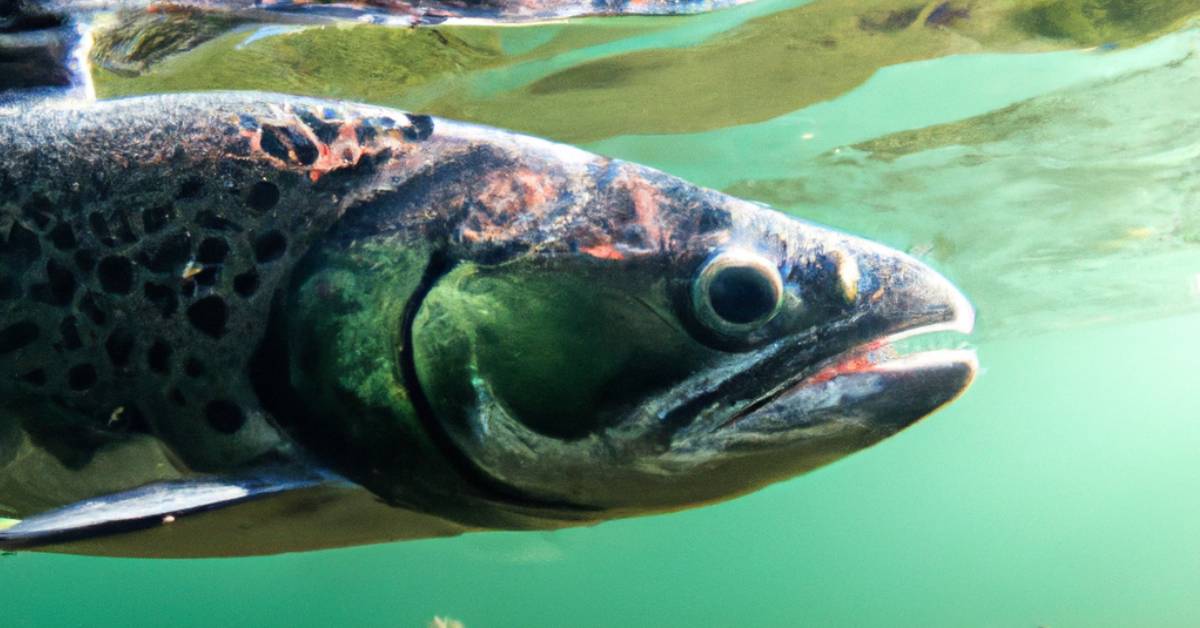
Welcome to Salmon Facts
Hi I’m Rick, a Marine Science teacher and salmon enthusiast! I manage Salmon Facts, the Internet’s most trusted and complete resource for facts about salmon and related species. From conservation efforts, to ocean farming, to salmon nutrition facts, to tips on sustainable sport fishing, we will cover it all.
The fact is that salmon is arguably the most popular seafood at the dinner table in many countries. Yet few are familiar with many varieties of salmon, how they are sourced, and how to tell if the salmon on your table is fresh and healthy. We’re here to help with all of those frequently asked questions and more!
Salmon Facts
Salmon is a typical fish of the cold seas of the North, Scotland, Norway, and Canada and is highly appreciated for its fine meat.
The shape of a salmon is notably slender and elongated, and the head is pointed. Salmon acquire their typical color during growth. In fact, they are born white, then thanks to a diet based on crustaceans, algae and plankton, the meat becomes pale pink. The precise color and appearance differ according to the variety.
The adult male can reach considerable dimensions, up to 5 feet in length for a weight of nearly 80 pounds; the females are generally less than 4 feet and 45 pounds in weight. Salmon usually lives 4-6 years and rarely reaches the age of 10.
Salmon species are widespread in the Pacific and Atlantic, but there is also a variety that lives only in freshwater. All salmon are born in freshwater, then most live in the ocean for a period of one to four years before returning upriver to spawn.
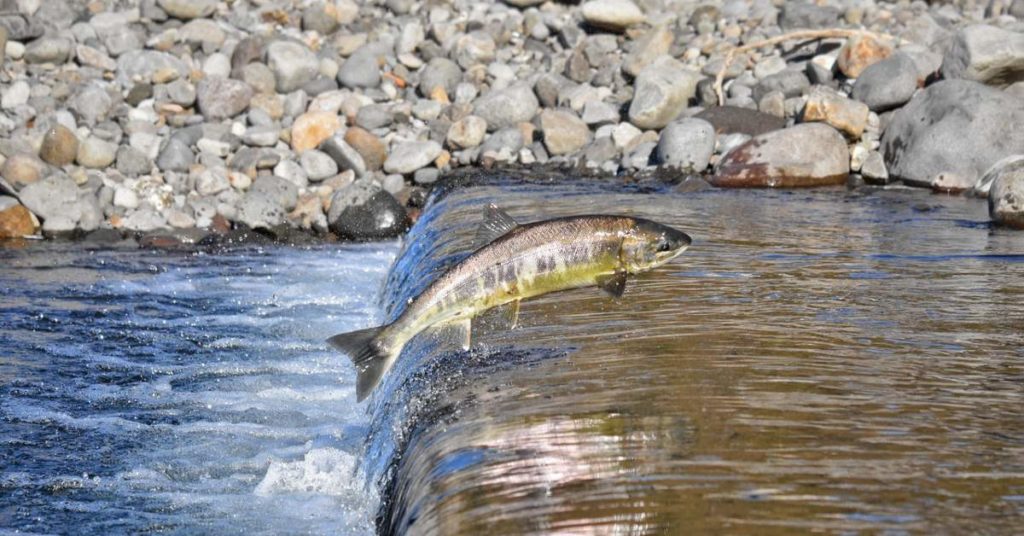
During its life, a salmon reproduces 3 or 4 times giving rise to spectacular ascents along the rivers. During the reproductive period it does not feed, and if it encounters any obstacles in returning to the breeding area, it shows an extraordinary tenacity in the attempt to overcome them. An adult salmon can in fact make leaps of ten feet in order to conquer the rapids and waterfalls until it reaches the cold mountain streams.
Once in these places, the salmon lays its eggs, fertilizes them and tries to return to the sea. However, only a few salmon manage to survive the return journey.
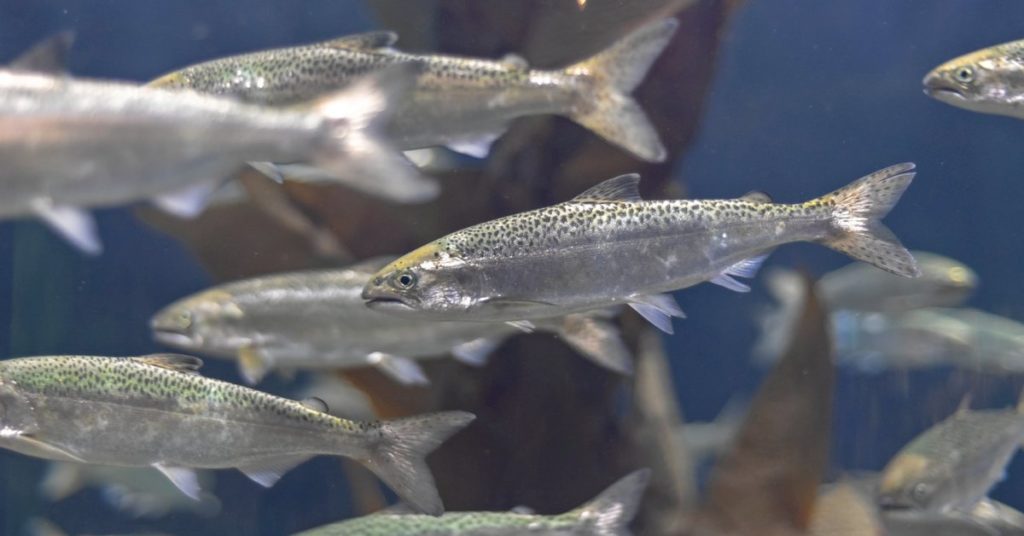
The eggs hatch after about three months of incubation and the fry that emerge from them share the same habitat as the trout for two or three years. After this period of time, the young salmon reach sufficient size to move to brackish waters where they stay for a short time before moving to the open sea. Just look at these cute little fry (yes, that’s what they’re called)!
Very abundant in the past, today it is rather rare due to intensive commercial fishing, the construction of dams, and habitat pollution. The Atlantic salmon was the first to risk extinction; today, however, thanks to breeding and good management of existing species, they are showing strong signs of recovery.
Check out this fun game on the website for the National Museum of the American Indian… and see your salmon survive!
THE RETURN UPSTREAM: Pick Your Salmon
Consequently, farmed salmon is increasingly common and wild salmon is increasingly rare. Unlike the Atlantic Ocean, where there is only one species, there are six salmon species in the North Pacific.